
Stages of Meiosis
Stages of Meiosis: Steps, Diagram, and All Phases in Order
What are the stages of meiosis? Explore the process of meiosis with a labeled diagram, meiosis steps in order, and each phase of meiosis explained from Prophase I to Telophase II.
What Are the Stages of Meiosis?
The stages of meiosis describe a two-part cell division process that produces four genetically unique haploid cells from one diploid parent cell. It is essential for sexual reproduction and occurs in all eukaryotes.
Meiosis Stages in Order:
- Prophase I
- Metaphase I
- Anaphase I
- Telophase I & Cytokinesis
- Prophase II
- Metaphase II
- Anaphase II
- Telophase II & Cytokinesis
These eight stages of meiosis are critical for reducing the chromosome number and introducing genetic diversity.
Meiosis Diagram and Labeled Phases
A meiosis diagram labeled helps visualize all meiosis steps clearly. Key features in such diagrams include:
- Synapsis of homologous chromosomes.
- Crossing-over during Prophase I.
- Spindle fibers aligning chromosomes at the metaphase plate.
- Separation of homologs and chromatids during anaphases.
These meiosis phases ensure proper segregation of genetic material across the four daughter cells.
Stages of Meiosis in Detail
Here’s a breakdown of each phase of meiosis:
| Phase | Description |
|---|---|
| Prophase I | Chromosomes condense; crossing over occurs; synapsis forms bivalents |
| Metaphase I | Tetrads align at the metaphase plate |
| Anaphase I | Homologous chromosomes pulled to opposite poles |
| Telophase I | Two haploid cells begin forming |
| Prophase II | Chromosomes re-condense; no DNA replication occurs |
| Metaphase II | Chromosomes align individually at the equator |
| Anaphase II | Sister chromatids pulled apart |
| Telophase II | Four haploid cells are formed (gametes) |
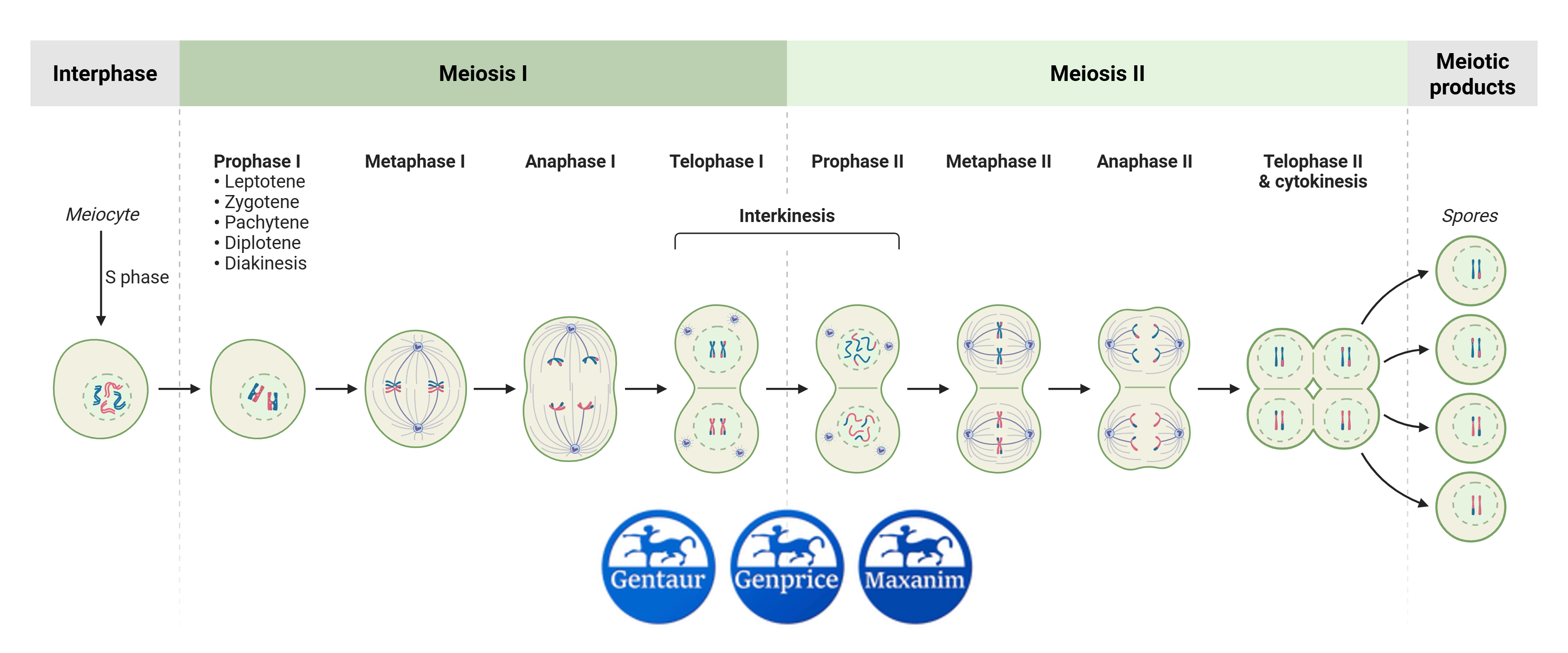
This chart shows all phases of meiosis in order.
Stages of Meiosis Animation
Premeiotic cells have two copies of each chromosome (2n), one derived from the paternal parent and one from the maternal parent. For simplicity, the paternal and maternal homologs of only one chromosome arediagrammed.
All chromosomes are replicated during the S phase before the first meiotic division, giving a 4n chromosomal complement. Cohesin complexes (not shown) link the sister chromatids composing each replicated chromosome along their full lengths.
As chromosomes condense during the first meiotic prophase, replicated homologs become paired as the result of at least one crossover event between a paternal and a maternal chromatid. This pairing of replicated homologous chromosomes is called synapsis. At metaphase, shown here, both chromatids of one chromosome associate with microtubules emanating from one spindle pole, but each member of a homologous chromosome pair associates with microtubules emanating from opposite poles.
During anaphase of meiosis I, the homologous chromosomes, each consisting of two chromatids, are pulled to opposite spindle poles.
Cytokinesis yields the two daughter cells (now 2n), which enter meiosis II without undergoing DNA replication. At metaphase of meiosis II, shown here, the chromatids composing each replicated chromosome associate with spindle microtubules from opposite spindle poles, as they do in mitosis.
Segregation of chromatids to opposite spindle poles during the second meiotic anaphase followed by cytokinesis generates haploid germ cells (1n) containing one copy of each chromosome (referred to as chromatids earlier).
What is the process of meiosis?
Meiosis reduces a diploid cell (2n) to four haploid cells (1n) and introduces genetic variation through crossing over and independent assortment.
There are no products listed under this category.